.png)

Nov 26, 2025

Keeping your pool clean and safe in Central Delaware’s warm, humid summers means more than just skimming leaves—it means maintaining the right chemical balance. At Family Pool Maintenance, we help pool owners from Dover to Milford stay ahead of algae, cloudy water, and skin irritation with expert water chemistry services. Here’s what you should know about the essential pool chemicals that keep your backyard oasis sparkling and safe.
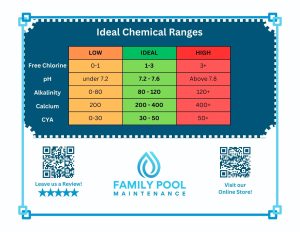
Chlorine is the most common sanitizer for pools in Delaware and across the U.S., and for good reason—it kills bacteria and algae before they can take hold. Whether you use tablets, liquid chlorine, or a saltwater system, maintaining the right chlorine level (1–3 ppm) is crucial.
Tip for Delaware pool owners: During the peak of summer humidity and heavy use, chlorine gets used up fast. Test your levels at least twice a week, especially after rainstorms, which are frequent in our region and dilute sanitizer levels.
In Central Delaware, water tends to be slightly acidic, so many pool owners need to regularly add sodium bicarbonate (baking soda) or pH increaser to maintain balance.
Common issue: If you notice eye irritation or scale buildup on your pool tile, it’s likely a pH imbalance—something we can fixable during regular maintenance visits.
Low calcium levels can cause water to leach minerals from your pool surfaces, leading to damage. Delaware’s water varies by source, but many areas, especially near the coast, have softer water that may require calcium hardness increaser to stay within the 200–400 ppm range.
CYA protects chlorine from burning off in the sun too quickly. Ideal levels for outdoor pools are between 30–50 ppm. Without it, your chlorine can disappear in a matter of hours during a sunny Delaware day.
Fun fact: If your pool gets full sun most of the day, especially in open areas like Camden or Felton, proper CYA levels are critical to saving on chlorine costs.
After a rainy week in Smyrna or an unexpected heatwave, algae growth can take off. Algaecides help stop growth before it starts, while clarifiers help bind tiny particles for easier filtration. These aren’t replacements for chlorine but act as helpful reinforcements.
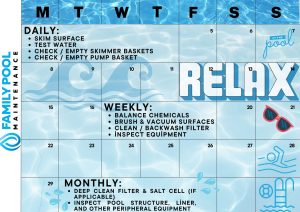
Here are some free downable guides to help with your weekly pool maintenance!
Don’t guess—test! And if you need help, contact us today with any questions or to schedule water testing and maintenance tailored to your pool and local conditions.
📞 (302) 270-3700
📍 Serving Dover, Milford, Harrington, Smyrna, and surrounding areas